Choosing the Jury: The Psychology Behind Voir Dire
By Keith Ablow, M.D.
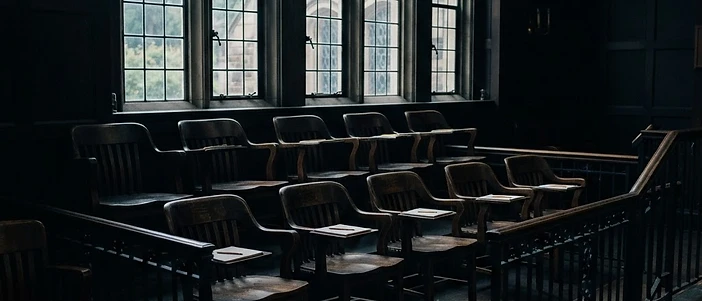
A trial begins long before opening statements. In a very real sense, it begins when prospective jurors walk into the courtroom, bringing with them not only their demographic characteristics and stated opinions, but entire lifetimes of experiences that have shaped how they decide whom to trust, what to doubt, what feels fair and what kinds of explanations make sense to them.
Attorneys understand how consequential jury selection can be. They know to explore prior experiences that may create obvious biases involving law enforcement, physicians, corporations, insurance companies, violent crime, personal injury, addiction, divorce or whatever issues intersect with the matter being tried. But there is another layer to jury selection that I believe can be extraordinarily important: understanding the psychological meaning behind the answers prospective jurors give and the ways in which they arrive at those answers.
After 25 years practicing psychiatry, I don't listen only to what people say. I listen for what their words may reveal about how they organize experience, whom they instinctively trust, what makes them uncomfortable, how readily they reconsider an opinion and what kinds of narratives resonate with them. I also pay attention to my own internal reactions as I listen, the moments when something feels unexpectedly emphatic, oddly qualified, emotionally charged or somehow inconsistent with what preceded it. Those reactions are not conclusions. They are signals to look more closely.
Jurors Are Not Demographics
It is tempting to believe that age, occupation, education, neighborhood, marital status or political affiliation can tell us how someone will respond to a case. Those facts may provide context, but human beings are far more complicated than demographic categories, and relying too heavily upon them risks missing the individual sitting directly in front of us.
Two people with remarkably similar backgrounds may hear precisely the same testimony and interpret it in completely different ways. One may instinctively identify with authority, while another instinctively questions it. One may assume that people generally tell the truth unless given a reason not to, while another begins from skepticism. One may be deeply uncomfortable with ambiguity and seek a clear answer quickly, while another may tolerate uncertainty remarkably well. One person may experience an emotional witness as authentic and moving, while another may experience the same emotion as calculated or manipulative.
These differences are not necessarily conscious positions that a prospective juror can articulate during voir dire. They may instead reflect enduring psychological tendencies, ways of processing information, evaluating other people and assigning meaning to events. Depending upon the nature of the case, those tendencies can be far more consequential than the boxes someone checks on a demographic questionnaire.
Listening Beyond the Answer
During voir dire, a prospective juror might give an answer that appears entirely favorable to an attorney's client. But the literal answer is only one piece of information. I am interested in how the answer was delivered, whether the person hesitated before giving it, whether it required multiple qualifications, whether the juror's tone or demeanor changed when a particular subject arose and whether there seemed to be unusual emotional intensity attached to an otherwise straightforward question.
I also pay attention when someone seems unusually eager to demonstrate impartiality, when a seemingly unrelated question produces a noticeable reaction or when an answer seems somehow at odds with the person's earlier statements. None of those observations proves bias or predicts a verdict. A gesture is not a diagnosis, hesitation is not evidence of deception and body language should never be treated as a psychological lie detector. But these observations can suggest areas that deserve further exploration.
That distinction is essential to the way I approach jury selection. Psychological insight should generate better questions, not premature conclusions. If something about a prospective juror's answer catches my attention, the objective is to understand why, rather than to assume I already know.
The Story Beneath the Story
Every juror enters the courtroom with a personal history that influences how he or she interprets human behavior. Someone who has repeatedly experienced betrayal may approach assertions of trust differently from someone whose life has repeatedly reinforced the reliability of others. A person who has spent a career making rapid, high-stakes decisions may process uncertainty differently from someone professionally trained to withhold judgment until every available fact has been examined.
The same principle applies to deeply held ideas about responsibility, vulnerability, authority, money, institutions and fairness. A person who places enormous value on individual responsibility may hear a plaintiff's story differently from someone whose experiences have made that person particularly attentive to circumstances beyond an individual's control. Someone who has spent decades working inside a large institution may instinctively understand organizational mistakes in ways that someone who distrusts large institutions does not.
For that reason, one of the most important psychological questions in jury selection is not simply what a prospective juror believes. It is how that person arrives at what he or she believes. Understanding the mental and emotional pathway by which someone reaches conclusions can tell us things that the conclusion alone cannot.
Finding Jurors Who Can Hear the Client's Story
Trial lawyers are storytellers, whether they use that word or not. They assemble facts into a coherent narrative and ask jurors to determine whether that narrative is supported by the evidence, while opposing counsel constructs a competing narrative from many of the same facts. The trial therefore becomes not only a contest over facts and law, but also a contest over which account of human behavior makes the most sense to the people who must decide the case.
Jury selection can therefore involve something deeper than identifying prospective jurors who appear sympathetic to a particular position. It can involve trying to understand which jurors are psychologically receptive to the fundamental premises underlying a client's story. Depending upon the case, that may mean exploring attitudes toward authority, responsibility, fairness, vulnerability, motive, punishment, forgiveness, institutions, money or risk.
It may also mean identifying the kinds of explanations a person finds intuitively credible. Some people are intensely interested in motive and feel they cannot fully understand an action until they understand why someone took it. Others are more behaviorally focused and care far less about why something happened than about what objectively occurred. Some people naturally search for inconsistencies and exceptions, while others instinctively try to assemble individual facts into a coherent whole. Neither cognitive style is inherently superior, but the distinction can be highly relevant to a particular theory of a case.
Twelve People Become a Group
There is another dimension of jury selection that can easily be overlooked when attention is focused on each prospective juror individually. A jury ultimately does not make its decision as twelve isolated people. It becomes a small group, and small groups develop hierarchies, alliances, tensions and influential personalities.
For that reason, I am interested not only in what a prospective juror appears to think, but in how that person may function in relation to others. Who seems comfortable expressing disagreement? Who appears inclined to defer to confidence or authority? Who may become more entrenched when challenged? Who has the interpersonal presence to become an informal leader? Who listens carefully before speaking, and who seems to formulate an opinion while everyone else is still talking?
Perhaps most importantly, I pay attention to who seems capable of changing his or her mind without experiencing that change as humiliation or defeat. Deliberation requires people to encounter competing interpretations and sometimes revise conclusions they initially held with confidence. A juror's relationship to being right, being challenged and being persuaded can therefore matter enormously once the courtroom door closes and deliberations begin.
Psychology Should Sharpen Judgment, Not Replace It
There are important limits to this work. No psychiatrist, psychologist, jury consultant or attorney can look at another human being and reliably predict exactly how that person will vote after hearing days or weeks of evidence. Human behavior is too complex for that, and anyone claiming certainty is promising more than psychology can deliver.
My role is different. I help attorneys identify psychological variables worth considering, listen for inconsistencies and emotional currents that may merit further inquiry, consider how particular personalities may interact with the central narrative of the case and help formulate questions that can reveal more about how a prospective juror thinks. I can also help counsel consider the emerging jury as a group rather than simply as a collection of individuals.
The attorney remains the attorney, and the decisions regarding jury selection remain counsel's. Psychological insight adds another lens through which those decisions can be considered, one informed by decades spent listening closely to people and trying to understand not merely what they believe, but how and why they came to believe it.
Voir Dire as an Exercise in Human Understanding
The courtroom is ultimately a profoundly human environment. Facts matter, evidence matters and law matters, but human beings must interpret all three. Jurors do not leave their personalities outside the courthouse. They bring into the jury box decades of experiences, assumptions, disappointments, loyalties, fears and beliefs about how people behave and why.
Good voir dire identifies obvious conflicts and biases. More psychologically informed voir dire can go further by illuminating the architecture through which a prospective juror may encounter the evidence, witnesses and competing narratives of a case. It can help counsel listen more closely, question more precisely and notice aspects of a prospective juror's thinking that might otherwise remain hidden in plain sight.
Choosing a jury, then, is not simply an exercise in determining who says he or she can be fair. It is an effort to understand what fairness means to each prospective juror, how that person decides what is true and how he or she is likely to participate in the intensely human process through which twelve individuals become one deliberating body.
Litigation Strategy Partners can bring this psychological and narrative lens to your deposition, trial strategy or jury selection.
Open a Secure Line of CommunicationKeith Ablow, M.D. is a New York Times bestselling author and psychiatrist who has spent 25 years evaluating human behavior, motivation, personality and narrative. Through Litigation Strategy Partners, he consults with attorneys on the psychological and narrative dimensions of complex and reputation-sensitive litigation. His work is consultative and does not constitute psychiatric evaluation, diagnosis or treatment.